



































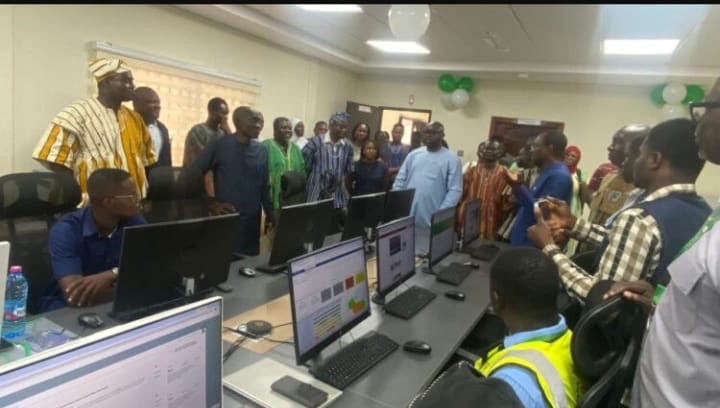
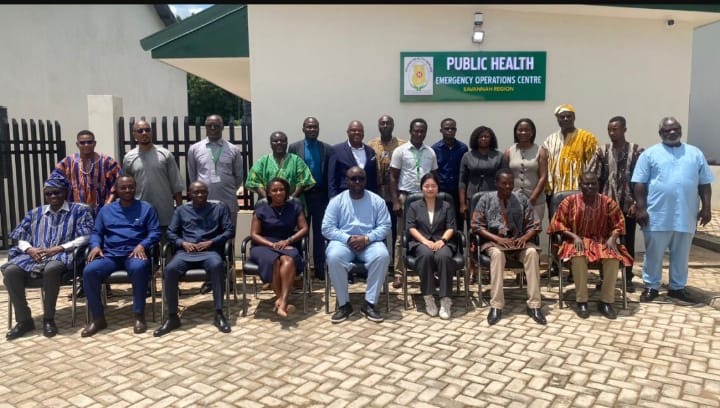
The Savannah Region has strengthened its capacity to detect and respond to disease outbreaks and other public health emergencies with the inauguration of a Public Health Emergency Operations Centre (PHEOC) in Damongo.


The centre, inaugurated on Tuesday, September 1, 2026, will serve as the region’s command hub for disease surveillance, health information analysis, emergency coordination and rapid response.
Its establishment is considered particularly important for the region because of its proximity to Burkina Faso and Côte d’Ivoire, extensive livestock and wildlife activities, and the presence of the Mole National Park, which attracts visitors from Ghana and abroad.
Savannah Regional Minister Salisu Yussif Be-Awuribe said the facility would help the region detect and connect early warning signals before health threats escalate into major emergencies.
He said the movement of people and animals across borders, combined with the region’s environmental and wildlife characteristics, created potential pathways for the emergence and spread of diseases.
“This is a system, not just a physical structure,” Mr Be-Awuribe said, describing the PHEOC as a nerve centre for gathering, analysing and distributing critical information during health emergencies.
He called for heightened vigilance among health workers and other stakeholders to ensure that suspected threats were detected and reported promptly.
The centre will operate under the Ghana Health Service (GHS) but will bring together institutions involved in Ghana’s One Health approach, including veterinary services, the Environmental Protection Agency (EPA), the National Disaster Management Organisation (NADMO) and security agencies.
Savannah Regional Director of Health Services, Dr John Ekow Otoo, said the centre would enable health authorities to identify unusual disease patterns and warning signs early through continuous monitoring and analysis of data from health facilities and communities.
“Before we can respond, we need to be able to detect it,” he said.
According to Dr Otoo, trained technical officers will monitor priority diseases and analyse information around the clock, with verified intelligence passed to policymakers and relevant authorities to guide emergency interventions.
He said the centre would also feed into Ghana’s national health emergency response structure.
Dr Otoo stressed that the PHEOC was not solely a GHS facility, noting that health emergencies could originate from humans, animals or environmental conditions.
“It’s not just for Ghana Health Service even though Ghana Health Service will directly manage it. It is for veterinary service, it is for NADMO, it is for EPA, it is for all other stakeholders who are part of the one health agenda,” he said.
The centre was established with support from the Korea International Cooperation Agency (KOICA), through the U.S. Centers for Disease Control and Prevention (CDC) and the African Field Epidemiology Network (AFENET), in collaboration with the Government of Ghana and other partners.
KOICA Ghana Deputy Country Director Boyeong Choe said the facility represented an investment in decentralised health security by bringing emergency response capacity closer to communities.
She said the 2025 Joint External Evaluation had highlighted the role of national and regional PHEOCs in coordinating emergency preparedness and response, while identifying areas requiring further strengthening.
Ms Choe cautioned, however, that the success of the facility would depend on its effective use rather than the infrastructure alone.
She urged the GHS and the regional health directorate to keep the centre operational, continuously train personnel and conduct regular simulation exercises to test the region’s preparedness.
The PHEOC forms part of broader support from South Korea, through KOICA, under the Global Health Security Agenda Phase II Project, which focuses on strengthening emergency preparedness and response, laboratory systems and health workforce capacity.
Mr Be-Awuribe commended KOICA, the U.S. Government, CDC and AFENET for their financial, technical and capacity-building support.
He said the facility would help the region fulfil Ghana’s obligations under the International Health Regulations by improving its ability to detect, report and respond to public health emergencies.
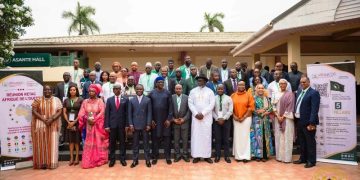
The inauguration brought together health officials, development partners, traditional leaders, security and other government agencies, including representatives of the GHS, US CDC, AFENET Ghana and the World Health Organisation.
Source: www.kumasimail.com