



































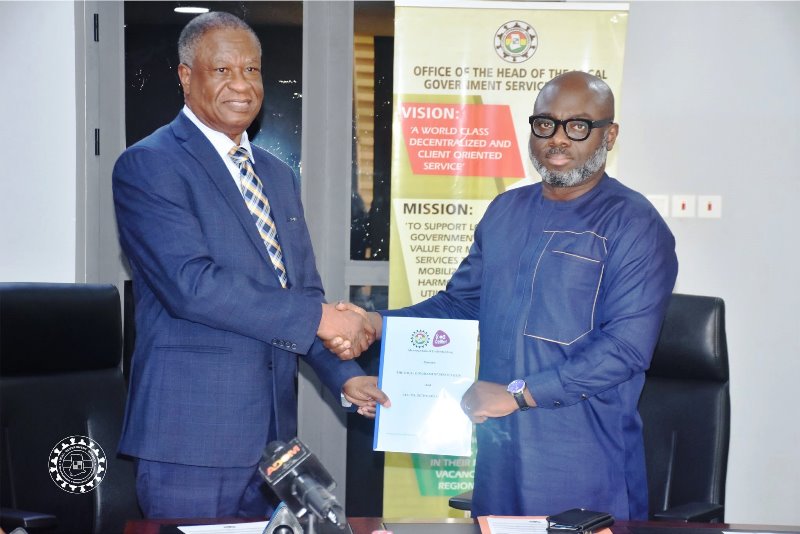
The Office of the Head of the Local Government Service (OHLGS) has signed a Memorandum of Understanding (MoU) with Celltel Networks Limited to begin a nationwide digital transformation programme aimed at turning Ghana’s 261 Metropolitan, Municipal and District Assemblies (MMDAs) into “Smart Assemblies” and “Smart Communities.”


The partnership, under the Local Government Service IT Infrastructure and Systems Improvement Programme (LITISIP), is expected to establish a secure and resilient digital backbone for local governance while expanding access to digital services, creating jobs and improving internally generated funds (IGF).
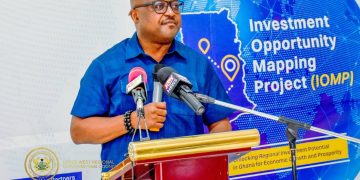
The Head of the Local Government Service, Prof. Lord Kwaku Mensah, said LITISIP was not simply an information technology project but the digital foundation for transforming local government delivery.
He said the initiative would move the Local Government Service beyond connecting offices to creating digitally connected communities where young people could learn, businesses could access markets and citizens could obtain government services digitally.
“Our objective is not merely to connect offices. Our vision is not simply connected government but connected communities where young people can learn, entrepreneurs can connect to markets and citizens can access government services digitally,” he said.
According to Prof. Mensah, the project will support the deployment of smart services in areas including waste management, public safety, education, healthcare, environmental monitoring and citizen engagement.
He said the initiative was aligned with President John Dramani Mahama’s digital transformation agenda and the 24-Hour Economy policy, stressing that MMDAs were the frontline of government service delivery where citizens directly experienced national policies.
Executive Chairman of Celltel Networks Limited, Dr Prince Kofi Kludjeson, said the project, backed by major global technology companies including Cisco, could position Ghana as a hub for Africa’s emerging smart cities ecosystem.
He said the initiative would extend beyond internet connectivity to transform education, healthcare, national security and revenue mobilisation at the local level.

Dr Kludjeson said digital infrastructure could also help create opportunities for young people in rural communities rather than forcing them to migrate to urban centres in search of opportunities.
“Today, our villages can become smart communities. Your children will not stay in the village because there is no Wi-Fi,” he said.
He also argued that Ghana’s local government system could provide an important gateway for investment across Africa, particularly with the African Continental Free Trade Area (AfCFTA) headquartered in Ghana.
The MoU signing, held at the OHLGS Conference Room on September 3, 2026, marks the start of the partnership to develop the digital infrastructure required to support the LITISIP programme.
The OHLGS said the collaboration would help create a more decentralised, technology-driven and citizen-focused Local Government Service while improving the capacity of assemblies to deliver services and generate revenue.
Source: www.kumasimail.com