















Ghana’s long-running struggle with cocaine trafficking has come under renewed scrutiny following a series of major drug seizures linked to the country, raising fresh questions about how international trafficking networks continue to operate despite successive enforcement efforts.


From seizures recorded during the administrations of the National Democratic Congress (NDC) and the New Patriotic Party (NPP) since the 1990s to major cases in 2025 and 2026, the pattern points to a problem that has persisted across different governments.
The latest incidents have intensified calls for investigations to go beyond the couriers and handlers who are arrested and establish who finances, organises and facilitates the movement of large consignments.
In August 2026, the Tema Regional Police Command intercepted 866 parcels of a substance suspected to be cocaineconcealed in sacks of gari at a warehouse within the Tema Harbour enclave. Three suspects, including a Dutch national and two Ghanaians, were arrested. The suspects were subsequently remanded by an Accra Circuit Court and pleaded not guilty to the charges.
A month later, French customs authorities seized nearly 3.9 tonnes of cocaine, estimated to be worth about €225 million, from a container carrying plastic waste that had arrived at the port of Dunkirk from Ghana. French authorities opened an investigation, while Ghanaian authorities also began investigations into how the shipment passed through the country’s export-control system.
The French seizure has prompted particular concern because of the sheer scale of the consignment and the international nature of the suspected network. Ghana’s Narcotics Control Commission (NACOC) subsequently announced the arrest of three suspects in Ghana in connection with the shipment and said investigators were examining their alleged roles in the operation.
A problem that predates the current administration
The history of major cocaine cases in Ghana stretches back several administrations.
Records cited in the list of cases include cocaine seizures during the Jerry John Rawlings administration in the 1990s; major seizures in Tema and elsewhere during the John Agyekum Kufuor administration; further interceptions during the John Evans Atta Mills and John Dramani Mahama administrations; and significant seizures during the Nana Akufo-Addo administration.
Official Ghanaian data also show that cocaine seizures continued during the 2020–2022 period. The country’s 2024 National Anti-Money Laundering, Counter-Terrorist Financing and Counter-Proliferation Financing Risk Assessment records cocaine seizures of 158.91kg in 2020, 32.50kg in 2021 and 117.01kg in 2022.
The issue has continued into the current administration. In March 2025, the National Intelligence Bureau (NIB) intercepted approximately 3.3 tonnes of cocaine concealed in a tipper truck at Pedu Junction in Cape Coast. The substance was later confirmed as cocaine and destroyed. Four people were subsequently arrested and granted bail, while the Interior Minister told Parliament that two prime suspects remained at large at the time.
In a separate March 2025 operation, NACOC arrested a Nigerian national, Uchechukwu Chima, after investigators found about 192kg of suspected cocaine and a quantity of heroin. NACOC described him as a long-time drug target and said he was suspected of being involved in previous seizures and arrests. The case remains subject to the judicial process.
The unanswered question of the “kingpins”
The recurring feature across many major drug cases is that the seizure itself often receives considerable attention, while questions about the wider networks behind the consignments can take longer to resolve.
That concern has now been voiced publicly by several individuals and organisations.
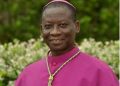
The Ghana Catholic Bishops’ Conference has called for investigations into recent trafficking cases to identify the networks, financiers and businesses supporting the trade. The Conference specifically urged authorities to “follow the money” rather than stopping investigations at the level of couriers and other peripheral actors.
Similarly, Suame MP John Darko has questioned whether investigations into major cocaine cases are sufficiently reaching the financiers and organisers of the trade. Other public commentators have made similar calls following the Dunkirk seizure.
There have, however, been instances where Ghanaian authorities say they have moved beyond couriers. In June 2026, NACOC announced the arrest of what it described as an alleged kingpin and two accomplices in connection with a 320kg methamphetamine shipment seized in Australia. The announcement demonstrates that investigations can reach suspected organisers, although each case must ultimately be determined through the courts.
The bigger institutional question
The succession of cases raises questions that extend beyond individual arrests: How are such large consignments entering or passing through Ghana? How do they move through ports, warehouses and legitimate commercial channels? Who finances the operations? And how are the proceeds moved and concealed?
NACOC says its recent operations have resulted in significant arrests and prosecutions and has called for stronger regional and international cooperation against transnational organised crime. The Commission reported 217 arrests, 165 prosecutions and more than 8.5 tonnes of assorted narcotic drugs intercepted during the period covered by its latest report.
The latest cases therefore place renewed focus not simply on the quantity of cocaine seized, but on whether investigations can establish the complete chain—from financiers and organisers to facilitators, transporters and international destinations.
For Ghana, the central challenge is no longer simply identifying and intercepting individual consignments. The continuing question is whether law-enforcement investigations can consistently trace the money, dismantle the networks and establish accountability at every level of the trafficking chain.
Until those questions are answered in individual cases through credible investigations and due process, the identities of the people ultimately directing the trade cannot responsibly be stated as established fact.
Source : www.kumasimail.com