







































The Supreme Court of Ghana has delivered a decisive, unanimous blow to Ashanti Port Services Limited (APSL), permanently striking down a US$33.3 million arbitral award the company had been fighting to reclaim.


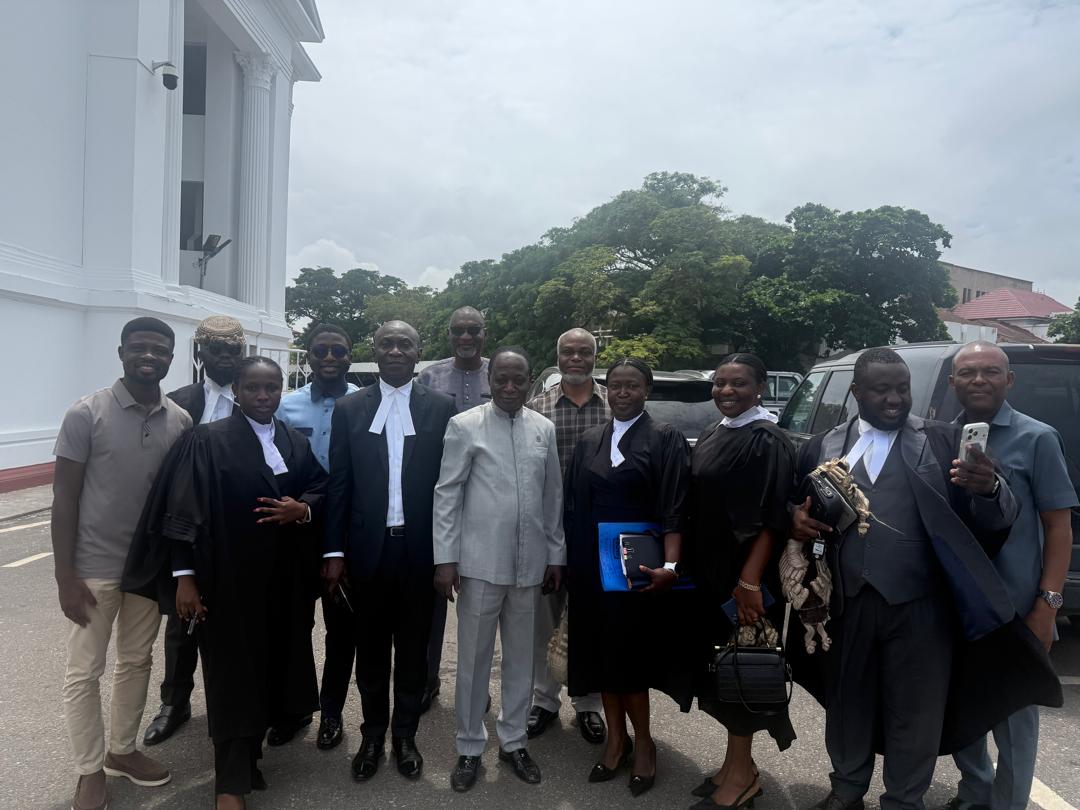
A five-member apex court panel, chaired by Chief Justice Paul Baffoe-Bonnie, threw out APSL’s application to overturn an earlier High Court ruling.
The panel, which also included Justices Asiedu, Richard Adjei-Frimpong Kwofie, Senyo Dzamefe Kodwo, and Amaleboba, declared that APSL’s attempt to invoke the court’s supervisory jurisdiction completely lacked merit.
The ruling draws the curtains on a bitter, multi-year legal saga surrounding the Boankra Inland Logistics Terminal Project, securing a definitive victory for Justmoh Construction Limited.
Verdict:
The Supreme Court’s decision solidifies a May 6, 2026 judgment by Justice John-Mark Nuku Alifo of the High Court’s Commercial Division.
The courts identified two fatal flaws in APSL’s case:
No Corporate Capacity to Sue:
The courts ruled that APSL did not have the legal or corporate authority to launch arbitration when the legal proceedings originally began.
Invalid Retroactive Fixes:
When APSL realized their oversight and held a later board meeting to retroactively approve the arbitration, the courts rejected it.
The initial lack of authority was deemed a “fundamental defect” that could not be legally patched up after the fact.
Unjust Enrichment Factor:
The High Court previously highlighted that awarding the money to APSL would amount to unjust enrichment.
Because the US$33.3 million was provided entirely by the state-owned Ghana Ports and Harbours Authority (GPHA)—and not by APSL, APSL had absolutely no right to demand a refund for money it never actually spent.
Case Roots:
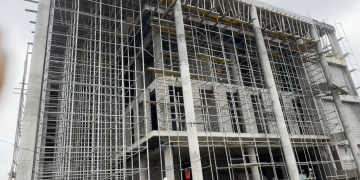
The legal battle stems from the Boankra Inland Logistics Terminal Project, a major state-backed infrastructure initiative intended to revolutionize transit trade and logistics across Ghana.
The project relies on key partnerships between the Ministry of Transport, the Ghana Shippers’ Authority, and the GPHA.
The dispute unfolded through a series of financial failures and legal pivots:
Background:
August 2022, APSL awards Justmoh Construction the contract for Phase 1A of the project.
Post-Appointment:
APSL fails to secure the private financing required under its concession agreement.
Funding Pivot:
To save the project, GPHA steps in with a US$33.3 million share subscription, paying Justmoh directly so mobilization work can begin.
August 2023:
The Ghana Shippers’ Authority officially terminates APSL’s concession due to lack of funds, prompting a state takeover.
December 2023:
Despite losing the project and not funding the work, APSL launches arbitration demanding Justmoh “refund” the US$33.3 million to them.
Late 2025:
An arbitral tribunal initially rules in favor of APSL, setting off the High Court appeal.
Due Process:
Lawyers for Justmoh Construction widely celebrated the apex court’s final ruling as a massive victory for institutional due process.
“We have always had confidence in our brief because we know the facts support our case,” stated Lead Counsel Professor Kwame Gyan following the judgment.
He added that, “It comes as no surprise that the Supreme Court agrees with us… Due process has won.”
With the Supreme Court firmly rejecting APSL’s final legal lifeline, the original High Court ruling stands, leaving Justmoh Construction fully vindicated.
Source: www.kumasimail.com