








































MTN fleet drivers in the Northern Region have undergone specialised road safety training aimed at improving their driving skills, promoting safer vehicle use and reducing preventable crashes involving the telecommunications company’s fleet.


The training forms part of a broader partnership between the Ghana Police Service and MTN Ghana, with the Police seeking to ensure that drivers operating the company’s branded vehicles are properly trained, competent and equipped to make safer decisions on the road.
ACP Alexander Kwaku Obeng, National Director of Research, Education and Training at the Police Motor Traffic and Transport Department (MTTD) who facilitated that training, said the training was particularly important given the frequency of road crashes and the need for corporate fleet operators to contribute to national road safety efforts.
He said preventable crashes continue to result in deaths and injuries, making it necessary for corporate organisations to equip their drivers with the best road safety practices while ensuring that vehicles deployed on the roads are safe and properly maintained.
“Preventable crashes and incidents are all over, associated with deaths and injuries,” ACP Obeng said, stressing that giving fleet drivers appropriate road safety training would sharpen their skills and make them safer road users.
He said the collaboration was expected to produce “safer vehicles and safer roads” while enabling MTN to contribute to the national target of reducing road crashes and their associated deaths and injuries by 50 percent.
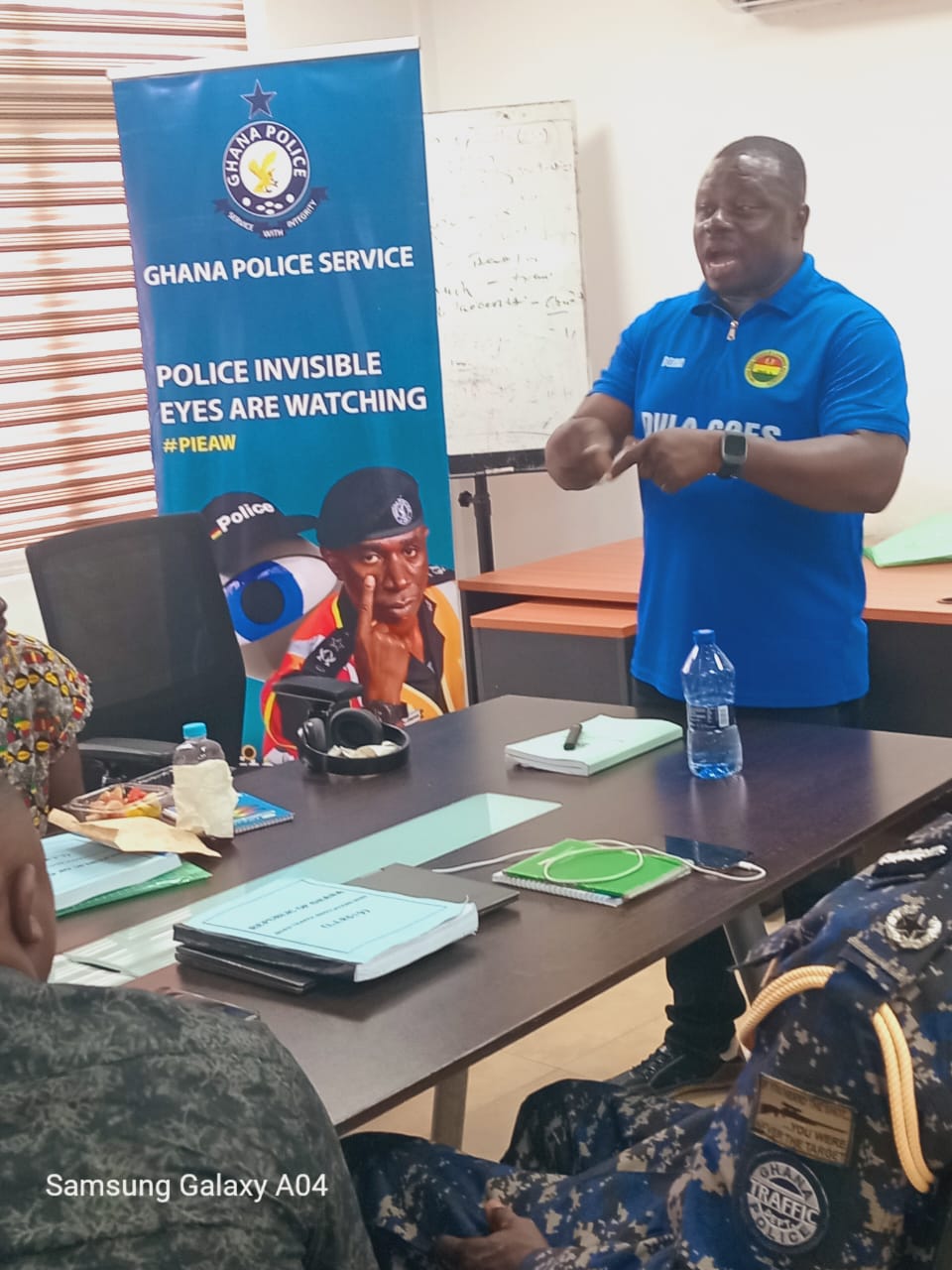
The Police Director also used the engagement to highlight the transition towards technology-driven traffic enforcement under the new Road Traffic Regulations 2026, L.I. 2519, which came into force on May 28, 2026.
According to him, the Ghana Police Service is building capacity and training personnel ahead of the wider deployment of automated road traffic offences and fines.
He said the system would complement conventional traffic enforcement by allowing technology and hardware devices to detect offences even where police officers were not physically present.
“What we cannot show you is that we have built the capacity, we have built our system, and our back office is inspected,” he said, adding that the police was preparing to sensitise critical stakeholders before the system becomes fully operational.
ACP Obeng said the new regulations would introduce several technology-driven measures, including RFID-embedded chips in number plates to enhance vehicle traceability.
He explained that the system would make it possible to identify vehicle owners and ensure that traffic tickets could follow offenders without necessarily requiring them to be taken to a police station.
The Ghana Police Service, he said, would subsequently undertake sensitisation exercises across the regions of Ghana in collaboration with other road safety stakeholders, including the Driver and Vehicle Licensing Authority (DVLA), National Insurance Commission (NIC) and other relevant institutions.
On road safety performance, ACP Obeng said Ghana recorded a marginal improvement in road crash indicators between January and July 2026 compared with the same period in 2025.

He said the country recorded about 8,100 crashes in the comparable period last year, with vehicles involved in crashes declining from almost 14,000 to about 13,800 this year.
Deaths stood at about 1,703, while injuries were estimated at around 9,000, both slightly lower than the corresponding period last year.
He, however, identified motorcycle-related deaths and injuries as a major concern, saying about 720 of the approximately 1,700 deaths recorded were associated with motorcycle-related injuries.
He also cited excessive speeding, poor street lighting, improperly parked vehicles, inadequate towing capacity, vehicle maintenance and motorcycle use as among the challenges undermining road safety.
ACP Obeng said the expansion and improvement of Ghana’s road network, coupled with stronger enforcement and increased use of technology, could help significantly reduce preventable crashes, deaths and injuries over time.
Source: www.kumasimail.com