





























For MTN Ghana, the real test of network expansion in Northern Ghana should no longer be the number of towers erected, but the opportunities those towers create for people who have historically remained on the margins of the digital economy.


That was the central message from Emmanuel Afutu, Senior Manager, Base Station Subsystems at MTN Ghana, when he addressed the 2026 Northern Ghana MTN Editors’ and Stakeholders’ Forum in Tamale.
Mr Afutu challenged stakeholders to look beyond network infrastructure and ask a more fundamental question: what does improved connectivity actually make possible for ordinary Ghanaians?
“Our measure of success is not simply by the number of sites we build. The real question is, what do these sites make possible?”
The question is particularly significant for Northern Ghana, where geographical distance, connectivity gaps and unequal access to digital opportunities have historically affected how communities participate in the wider digital economy.
Mr Afutu said MTN Ghana was deploying 80 new sites across the four northern regions, with 38 in the Northern Region, 17 in Savannah, 14 in Upper East and 11 in the North East Region.
But he said the value of the investment would ultimately be measured by what improved connectivity enabled people to achieve.
A farmer, he explained, should be able to use connectivity to reach markets; a young person should be able to access online learning; businesses should be able to receive digital payments; and families separated by distance should be able to remain connected.
He further linked network expansion to security, noting that eliminating connectivity “dark spots” in areas facing security challenges could improve the ability of people to remain connected and secure.
From signal to economic power
The presentation placed particular emphasis on the transformation of mobile connectivity from a communication tool into an economic asset.

Mr Afutu recalled that three decades ago, mobile phones were a luxury and residents in some parts of northern Ghana had to climb hills to obtain a signal.
He cited the experience of the Regional Minister, who reportedly recalled having to stand on a hill in Saboba to make telephone calls.
Today, he said, that reality has changed considerably.
“Connectivity without opportunity is not enough,” Mr Afutu said. “People must not only have access to technology, but they must have the skills and opportunities to use it to improve their lives.”
That distinction, he suggested, is becoming increasingly important as digital services penetrate virtually every aspect of economic activity.
Mobile Money, he said, was one of the clearest examples.
In the first half of 2026, Mobile Money value grew by 44.4 per cent year-on-year, active users increased by 3.1 per cent, while transaction volumes and Mobile Money revenue both recorded 23.3 per cent growth.
For Mr Afutu, those figures represent more than corporate growth.
“For millions of Ghanaians, mobile is no longer simply a payment service. It has become a tool for doing business, transferring money, saving and, particularly, participating in the digital economy.”
The northern child and the digital divide
Mr Afutu’s strongest argument, however, was about equality of opportunity.
He said connectivity should help bridge the gap between children growing up in rural communities and those in major urban centres.
“The young child in Nakpanduri should have the same chance as the students in Tamale or in Accra. There should be digital equality.”
That proposition places network expansion within a broader development conversation: whether digital infrastructure can become a tool for reducing rather than reproducing existing inequalities.
Mr Afutu said MTN Ghana therefore recognised that infrastructure alone would not close the digital divide.
Affordability, access, digital literacy and relevant skills, he said, would continue to determine who benefits fully from technology.
He called for collaboration among government, regulators, security agencies, educational institutions, development partners, businesses and communities to address those challenges.
A business that must deliver public value
The argument for connectivity as a development tool was also tied to MTN Ghana’s financial performance.
Mr Afutu disclosed that the company’s service revenue increased by 32.2 per cent to GH¢15.0 billion in the first half of 2026, while EBITDA rose by 47.1 per cent to GH¢9.3 billion and profit after tax increased by 46.8 per cent to GH¢5.1 billion.
MTN Ghana also paid GH¢5.6 billion in direct and indirect taxes during the period, in addition to GH¢384.7 million in fees and levies, he said.
But he argued that the significance of the figures went beyond profitability.
“A strong MTN means that we can continue to invest in the network. We can continue to create jobs. We can support communities and we can contribute to national development.”
That philosophy also extends to the company’s social interventions, including the MTN Skills Academy, which targets more than 100,000 young people with digital and financial skills, career readiness and mentorship.
The MTN Ghana Foundation’s Bright Scholarship has also supported more than 1,200 students, with beneficiaries receiving support for school fees, accommodation and essential learning tools, including laptops.
Media as a critical partner
For Kwami Aseye Akude, Retail Experience Manager, Northern Ghana, the forum itself reflects another dimension of MTN’s relationship with the region: the need for sustained engagement with institutions and stakeholders who can interrogate the company’s claims and performance.
He said the annual regional engagement was designed to strengthen relationships with the media, government institutions, regulators and other stakeholders.
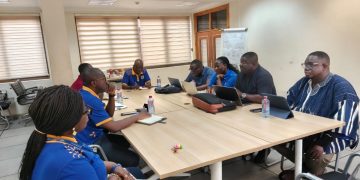
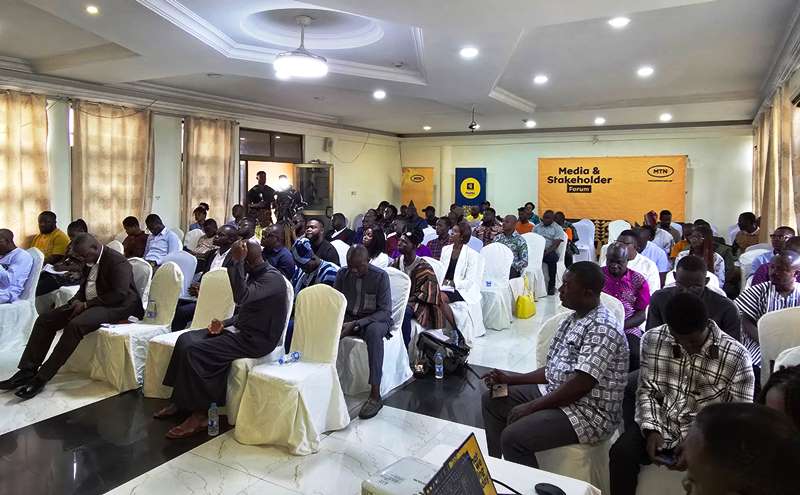
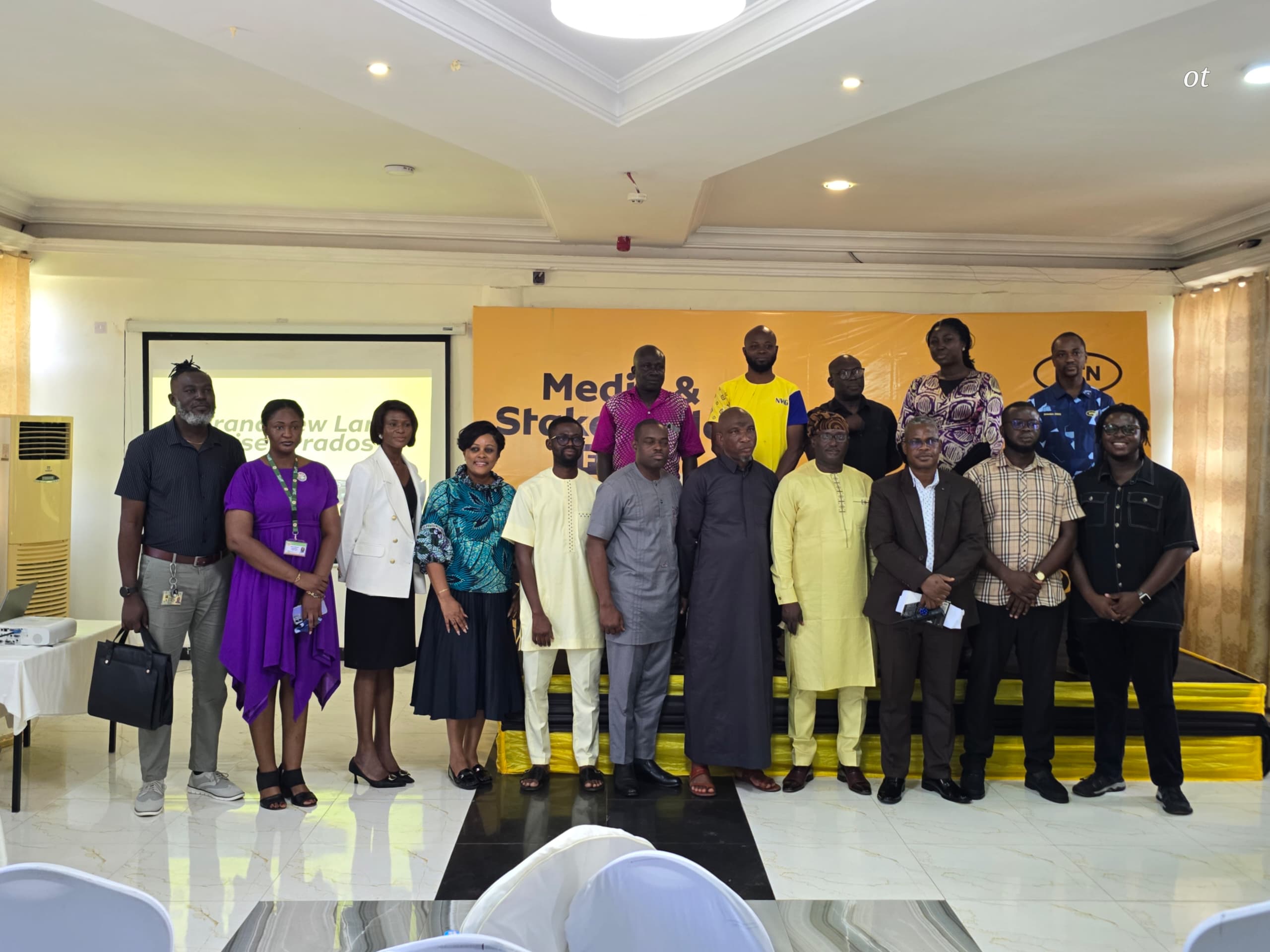
The 2026 forum brought together editors and media representatives from the Northern, Upper East, North East and Savannah Regions, providing a platform for the media to assess MTN Ghana’s operations and seek clarification on issues of public interest.
Mr Akude said the four regions occupy an important position in Ghana’s development because of their agricultural base, local economies and growing opportunities in trade, education and enterprise.
“Your presence reflects the importance of the relationship we have built over the years, and we sincerely appreciate you taking your time to join us here today.”
He said MTN valued the engagement because the company’s progress was closely connected to the communities it serves.
“We look forward to a very productive and insightful engagement, and we are very confident that the discussions will further strengthen the relationships and collaborations that are important to our shared progress.”
The forum therefore ended not simply as another corporate anniversary engagement, but as a reminder that the real measure of Ghana’s digital transformation—particularly in the northern parts of the country—may ultimately be found not in the number of towers on the landscape, but in the number of farmers, students, entrepreneurs, families and communities whose opportunities expand because those towers are there.
Source: www.kumasimail.com