















The New Patriotic Party (NPP) has challenged the government’s claims of economic recovery ahead of the 2026 Mid-Year Budget Review, arguing that the country’s reported fiscal improvements were achieved largely through expenditure cuts rather than sustainable revenue growth.


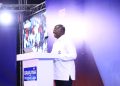
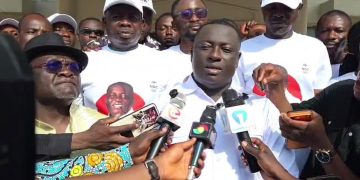
At a press briefing in Accra on Wednesday, the party’s Policy Coordination Committee on Finance and Economy said the government must provide a transparent account of its fiscal performance when the Finance Minister presents the mid-year budget review in Parliament.
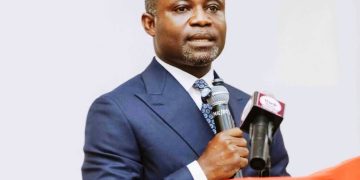
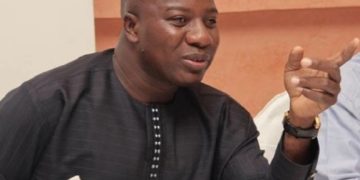
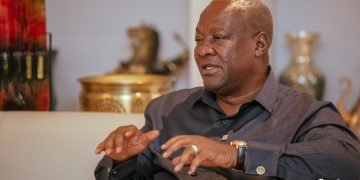
Speaking on behalf of the committee, Chairman Kojo Oppong Nkrumah said the NPP’s assessment of official economic data raised concerns about the quality and sustainability of the government’s reported primary surplus and broader economic indicators.
According to the opposition, the government’s reported 2025 primary surplus of 2.6 percent of Gross Domestic Product (GDP), exceeding the target of 1.5 percent, was achieved through a significant reduction in public expenditure rather than improved revenue mobilisation. The party cited government data indicating that revenue fell below revised targets while expenditure was compressed by nearly 14 percent.
The NPP further alleged that first-quarter spending in 2026 remained substantially below budgeted levels, with capital expenditure, foreign-financed projects, goods and services, and grants to sectors including health and education all falling short of targets.
The party also questioned the sustainability of the government’s economic performance, arguing that recent growth has been driven largely by high international gold prices rather than structural economic reforms. It called on the government to publish sensitivity analyses showing how changes in gold prices, fuel costs and exchange rates could affect growth, trade balances and fiscal performance.
On inflation and the exchange rate, the NPP said headline inflation has begun rising again after months of decline, while the cedi has depreciated this year. The party argued that these developments could undermine recent gains in debt sustainability and economic stability.
The opposition also raised concerns over what it described as inconsistencies in Ghana’s public debt figures reported by the Bank of Ghana and the International Monetary Fund (IMF). It urged the government to present a reconciled debt-to-GDP figure and a detailed debt sustainability analysis during the budget review.
The NPP further criticised the financial position of the Bank of Ghana, citing reported losses and negative equity that it said could place additional pressure on future public finances. It also welcomed the central bank’s reported decision to discontinue pre-financing gold purchases for GoldBod, maintaining that it had long opposed the arrangement.
Beyond macroeconomic issues, the party questioned the implementation of flagship government programmes, including the proposed 24-Hour Economy initiative and the Big Push infrastructure programme. It argued that announced job figures were largely based on memoranda of understanding rather than operational projects and called for verified employment data and greater disclosure of procurement processes.
The NPP additionally urged the government to provide updated figures on outstanding arrears, disclose half-year budget execution by expenditure line, clarify the status of the proposed Fiscal Council and Debt Management Office, and outline a financing strategy for its growth agenda.
The Finance Minister is expected to present the 2026 Mid-Year Budget Review to Parliament on Thursday. The review is anticipated to provide an update on Ghana’s fiscal performance, economic outlook and implementation of the IMF-supported programme.
The NPP said it would assess the government’s presentation against official economic data, insisting that Ghanaians deserve “numbers, not narrative.”
Source: www.kumasimail.com