






































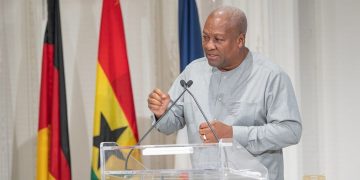



The Chief Executive Officer of the National Entrepreneurship and Innovation Programme (NEIP), Eric Adjei, is advocating the transformation of the agency into a statutory Ghana Start-Up Agency to provide a permanent institutional framework for developing and scaling businesses in the country.


Mr Adjei argues that Ghana’s entrepreneurship ecosystem has outgrown the model of government-funded programmes that can be redesigned or discontinued by successive administrations.
He says the country needs a legally established institution with a clear mandate to identify, support, finance and scale start-ups, while coordinating public and private-sector efforts to drive innovation and job creation.
The proposal builds on the evolution of government entrepreneurship interventions, beginning with the Youth Enterprise Support (YES) Fund and its subsequent transition into NEIP, which assumed a broader mandate covering entrepreneurship and innovation.
According to Mr Adjei, however, the interventions have largely remained government programmes rather than permanent institutions established by law.
“The time has come to move from programmes to an institution,” he said.
Constitutional basis
Mr Adjei says the proposed agency would also give institutional expression to the economic objectives of the 1992 Constitution, particularly Article 36, which requires the State to manage the national economy in a manner that promotes economic development, employment and adequate livelihoods.
He pointed specifically to Article 36(2)(b), which requires the creation of an economic environment that provides opportunity for individual initiative and creativity and gives the private sector a pronounced role in the economy.
A statutory Start-Up Agency, he argues, would provide a dedicated institutional mechanism for advancing those objectives through entrepreneurship, innovation and private-sector development.
Under his proposal, the agency would be established by an Act of Parliament, with defined functions, governance arrangements, accountability mechanisms and predictable funding.
From grants to investment
Mr Adjei says the proposed institution should also mark a shift away from treating entrepreneurship primarily as a government grant programme.
He believes start-ups require more than seed funding, including technical skills, mentorship, technology, investment, market access and opportunities to scale.
The proposed model would therefore establish a pipeline from identification and training through incubation, financing, mentorship and market access to scale-up and export.
“This is not about creating another bureaucracy,” he said. “It is about institutionalising Ghana’s commitment to entrepreneurship, innovation and job creation.”
He said public resources should be used strategically to attract private capital rather than create permanent dependence on government grants.
The agency, under the proposal, would work with banks, venture capital and private equity firms, angel investors, pension funds, development finance institutions and international partners to mobilise capital for promising Ghanaian businesses.
It would also collaborate with existing regulators and institutions rather than duplicate their functions.
For instance, the Securities and Exchange Commission already regulates Ghana’s securities market, including venture capital and private equity funds. The proposed Start-Up Agency would instead concentrate on start-up development and ecosystem coordination, while helping viable businesses connect with appropriate sources of investment.
Regional focus
Mr Adjei also wants the proposed agency to break from an Accra-centred approach to entrepreneurship development.
He says every region has businesses and opportunities capable of supporting economic growth, particularly in agriculture, agro-processing, manufacturing, tourism, technology and the creative industries.
A statutory agency, he argues, should therefore have a deliberate regional structure to identify and develop businesses across the country.
Link to Start-Up Bill
The proposal comes as Ghana continues work towards establishing a broader legal and regulatory framework for start-ups and innovation through the proposed Ghana Innovation and Start-Up Bill.
Mr Adjei said the ongoing legislative process provides an opportunity to create a coherent institutional architecture for entrepreneurship rather than simply establishing another government agency.
He said the proposed Start-Up Agency should be positioned within that framework with clearly defined responsibilities that complement existing institutions.
He is therefore calling on government, Parliament, entrepreneurs, investors, academia, development partners and the private sector to participate in the debate over how Ghana should institutionalise support for start-ups.
For Mr Adjei, the objective is to create a system that survives political cycles and moves Ghana from repeatedly launching entrepreneurship programmes to building an enduring ecosystem.
“Ghana does not lack entrepreneurial talent,” he said. “What we need is the statutory institution to turn ideas into businesses, businesses into jobs, and businesses into industries.”
Source: www.kumasimail.com