
























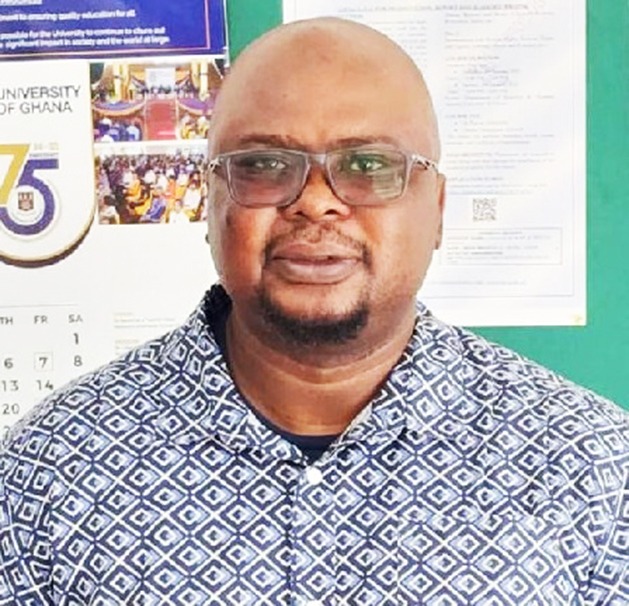
Ghana’s democratic future will depend less on the conduct of periodic elections and more on how well citizens understand and exercise their constitutional rights, Dr. Michael Augustus Akagbor, Senior Programmes Manager for Human Rights and Social Inclusion at the Centre for Democratic Development (CDD-Ghana), has said.


According to him, while Ghana has earned international recognition for conducting peaceful elections and sustaining constitutional rule, insufficient investment in civic and human rights education is undermining the country’s democratic growth and leaving many citizens unaware of the rights guaranteed them under the 1992 Constitution.
Dr. Akagbor made the remarks in an interview after a two-day stakeholder capacity-building workshop on Human Rights, Non-discrimination and Protection of Vulnerable People in Ghana, organised by CDD-Ghana in Tamale.
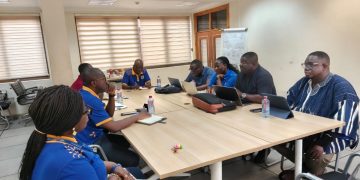
The workshop brought together representatives from the Ghana Police Service, Ghana Prisons Service, National Commission for Civic Education (NCCE), Environmental Protection Agency (EPA), Ghana Education Service (GES), religious organisations, civil society organisations, and the media to strengthen collaboration in promoting and protecting the rights of vulnerable and marginalised groups across the country.
The training sought to build the capacity of stakeholders to appreciate human rights principles, understand Ghana’s constitutional obligations and become advocates for non-discrimination and inclusion within their respective institutions. It also examined emerging human rights issues, constitutional protections and contemporary debates surrounding the proposed Ghanaian Family Values Bill 2026.
Reflecting on Ghana’s democratic journey, Dr. Akagbor argued that public discourse has become excessively centered on elections while neglecting the constitutional rights that give democracy its true meaning.
“Yes, elections are important,” he said, “but elections do not make democracies. Human rights are what make democracies.”
He explained that elections merely provide citizens with the opportunity to exercise their rights, adding that democracy becomes meaningful only when people understand those rights and are able to exercise them freely without fear, discrimination or abuse.
“We have become very focused on elections, but what actually gives us democracy—the rights that enable us to elect our leaders—we have not given enough attention. Democracy is about creating a society where people have the capacity to exercise their rights and collectively make decisions.”
Dr. Akagbor attributed many of Ghana’s governance and accountability challenges to widespread ignorance of constitutional rights.
He observed that many Ghanaians are unaware of the protections available to them and therefore fail to seek redress when those rights are violated.
“There is a lot of lack of knowledge about rights in this country. Many people don’t even know the rights that accrue to them under the Constitution. As a result, people suffer violations every day without even realising that the Constitution provides avenues for justice.”
He cited routine encounters between motorists and police officers as an example of how ignorance of constitutional rights often contributes to abuses.
According to him, although police officers have legal authority to enforce traffic regulations, citizens equally possess constitutional rights during such interactions.
“When a police officer stops you, you have the right to ask why you have been stopped. The officer is required by law to explain the reason and inform you of the next steps. Many people don’t know this, and that ignorance sometimes creates room for abuse and bribery.”
He stressed that greater public awareness of constitutional rights would strengthen accountability within public institutions while empowering citizens to challenge abuses through lawful means.
The CDD-Ghana official also expressed concern over what he described as decades of inadequate civic education, blaming successive governments for failing to adequately resource the National Commission for Civic Education.

He described the neglect of the Commission as unfortunate, saying it has weakened public understanding of democracy and constitutional governance.
“The NCCE was established specifically to educate citizens about their civic responsibilities, their constitutional rights and the obligations that exist between citizens and the state. Unfortunately, the Commission is under-resourced. It lacks the staff, funding and capacity to carry out its mandate effectively.”
Dr. Akagbor noted that because of these limitations, civil society organisations have increasingly stepped in to fill the gap by organising public education programmes and stakeholder engagements such as the Tamale workshop.
“If government is serious about building an informed citizenry capable of participating meaningfully in democratic governance, then it must intentionally invest in civic education by adequately resourcing the NCCE to perform its constitutional mandate.”
He said CDD-Ghana organised the workshop not only to discuss the rights of vulnerable populations but also to equip stakeholders with the knowledge required to promote constitutional values within their institutions.
“Our objective is to engage stakeholders in dialogue while building their capacity to become agents for the promotion and protection of human rights wherever they work.”
During the workshop, William Nyarko, Executive Director of the Africa Centre for International Law and Accountability (ACILA), led discussions on international, regional and domestic human rights frameworks, Ghana’s constitutional obligations to protect the rights of all persons, and the legal implications of the proposed Ghanaian Family Values Bill 2026.
His presentations provided participants with an overview of the constitutional and international legal standards governing human rights protection and emphasised the need for state institutions to uphold Ghana’s obligations under both domestic and international law.
Dr. Akagbor believes such engagements remain essential if Ghana is to deepen its democratic culture beyond periodic elections.
He argued that protecting vulnerable people, strengthening public institutions and promoting constitutional rights are inseparable components of democratic governance.
“A democracy cannot thrive simply because elections are held every four years,” he said. “It thrives when citizens know their rights, understand their responsibilities and have confidence that the Constitution protects everyone equally.”
He added that until civic education receives the attention it deserves, Ghana will continue to struggle with human rights abuses, weak public accountability and limited citizen participation in governance.
Source: www.kumasimail.com