

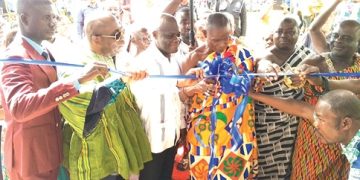






























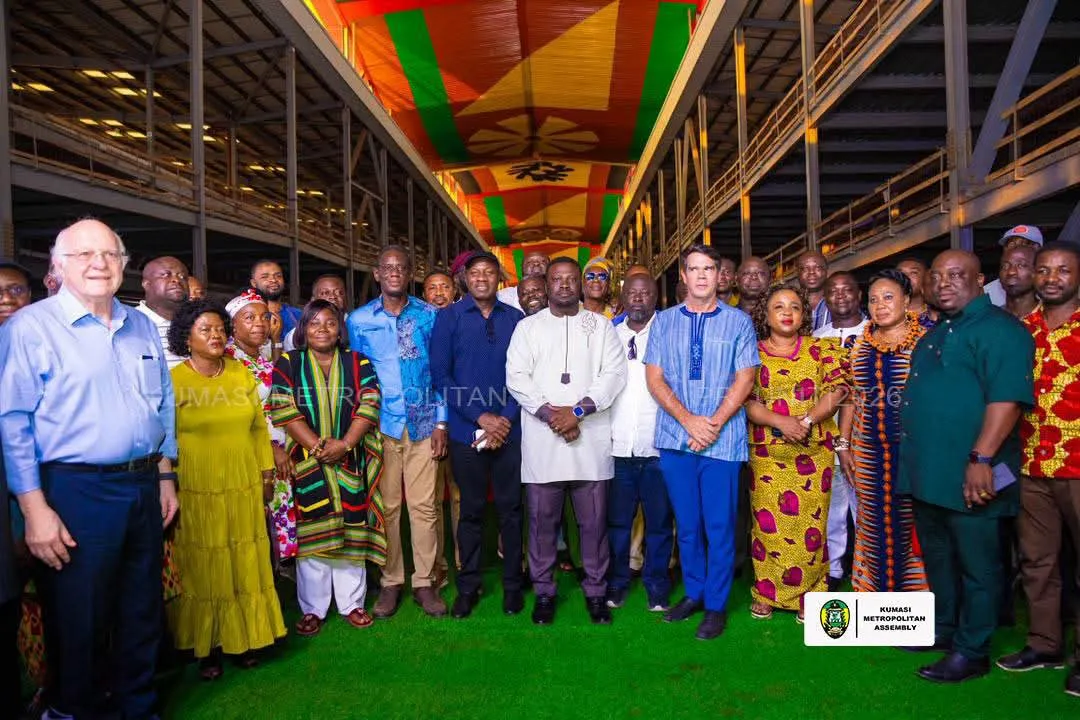
The Ministry of Local Government, Chieftaincy and Religious Affairs, in collaboration with the Kumasi Metropolitan Assembly (KMA), has engaged key stakeholders on measures to facilitate the completion of the Kumasi Kejetia Redevelopment Project Phase II.


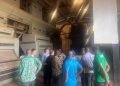
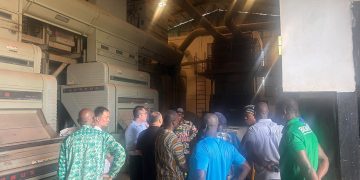
The engagement, held at the Phase II project site, on sunday 20th September 2026, focused on the progress of the project, funding arrangements, outstanding challenges and measures required to ensure its completion.
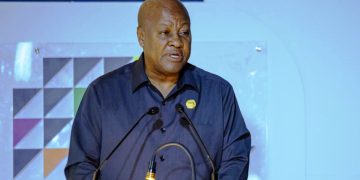
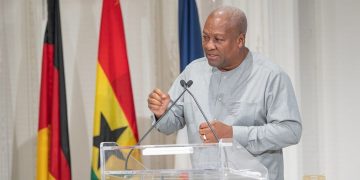
In his welcome address, the Mayor of Kumasi, Richard Ofori-Agyemang Boadi, said the completion of Phase II remained a priority for President John Dramani Mahama and the Sector Minister, Mahama Ayariga.
He disclosed that following engagements with stakeholders and the Ministry of Finance, arrangements were being made for contractors to return to the project site in October 2026.
According to the Mayor, completing the project would help ease pressure and congestion in Kumasi’s Central Business District (CBD), while providing traders and other users with improved facilities.
He also raised concerns over the payment of rents and premiums, explaining that the original financing arrangement envisaged using proceeds from Phase I to support the development of subsequent phases.
However, he said revenue generated from Phase I had been inadequate, contributing to the need for additional government financing and delays in completing Phase II.
The Ashanti Regional Minister, Dr. Frank Amoakohene, reaffirmed government’s commitment to completing the project, describing Kejetia as an important commercial asset for Kumasi and the wider Ashanti Region.
He assured traders and transport operators that government remained committed to ensuring that they benefited from the completed facility.
Speaking on behalf of the Sector Minister, the Mayor disclosed that approximately GH¢89 million had so far been realised from Phase I, which he said was insufficient to finance the subsequent development as originally envisaged.
He further indicated that future charges for shops and other facilities would reflect their actual value.
Stakeholders were also reminded that the initial five-year premium period had elapsed. Traders with outstanding premium payments were therefore urged to settle their obligations by December 31, 2026, to avoid losing their shops due to non-payment.
Representing the Otumfuo Apagyahene, Oheneba Owusu Afriyie IV, recalled that at the inception of Phase I, His Majesty Otumfuo Osei Tutu II had been informed that proceeds from the first phase would contribute towards financing subsequent phases.
He therefore urged traders with outstanding premium obligations to fulfil their commitments.
Oheneba Owusu Afriyie IV also called on government to adhere to agreed rules and ensure fairness and transparency in the allocation of shops, stressing the need to avoid partisanship in the process.
He said Kumasi remained a major commercial hub and that the completion of Phase II would further strengthen the city’s role as a centre for trade and commerce.
Consultant to the project, Mr. Tony Asare Yeboah of Avargade Design Services, subsequently presented an overview of the Phase II development.
The project comprises four levels with a total of 10,528 trading points and a range of supporting facilities.
The ground floor is designed to include a 600-space parking area, transport facilities, bulk-breaking areas, warehouses, a crèche, clinic, police post, banking facilities, fire post and administrative offices.
The first floor will accommodate counters and a traditional market with approximately 3,760 trading spaces, while the second and third floors will contain lockable shops and other ancillary facilities, comprising approximately 6,650 spaces.
The engagement also featured an open forum during which stakeholders raised questions and concerns relating to the project and its completion.
The meeting ended with a renewed commitment by the stakeholders to finding a sustainable financing and implementation path to complete the Kejetia Phase II project and unlock its anticipated economic benefits for Kumasi and the Ashanti Region.
Source:www.kumasimail.com