
































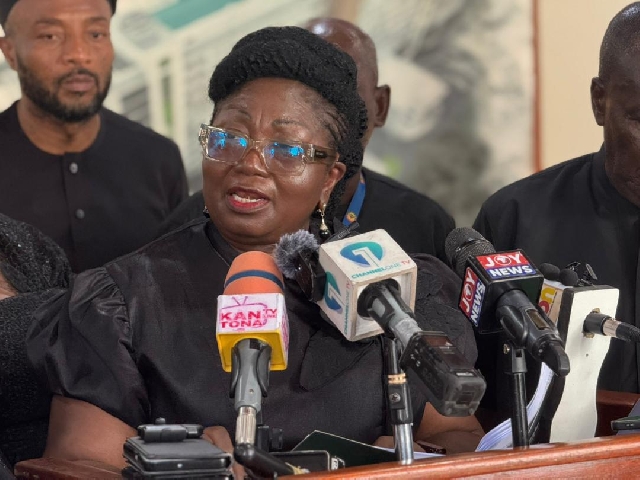
The Parliamentary Minority Caucus has criticized the High Court judgment convicting New Patriotic Party (NPP) Ashanti Regional Chairman, Bernard Antwi-Boasiako, popularly known as Chairman Wontumi, and Akonta Mining Limited, arguing that the trial was marred by constitutional and legal defects that undermine public confidence in Ghana’s justice system.


Addressing the media in Accra on Tuesday, the Minority said its intervention was not intended to defend an individual but to safeguard constitutional principles and ensure equal application of the law.
“We speak not as advocates for one man, but as custodians of a constitutional order that must apply equally to every Ghanaian, regardless of political colour,” the caucus stated.
The Minority expressed solidarity with Chairman Wontumi, his family, the NPP in the Ashanti Region and party supporters, describing the conviction as a difficult moment while pledging to pursue all lawful parliamentary and public advocacy avenues to ensure what it termed justice.
The caucus emphasized, however, that it respects the independence of the judiciary and supports efforts to combat illegal mining.
“We support accountability. We support the vigorous prosecution of illegal mining, a scourge that has degraded our rivers and endangered the livelihoods of generations yet unborn. We seek immunity for no one on the basis of party,” the statement said.
Despite this position, the Minority identified what it described as four major legal and constitutional flaws in the proceedings.
Denial of counsel
The caucus argued that the High Court proceeded to deliver judgment in the absence of Chairman Wontumi’s lead counsel, despite prior notification that the lawyer was abroad on professional duties.
According to the Minority, this amounted to a violation of Article 19 of the 1992 Constitution, which guarantees an accused person’s right to legal representation of his or her choice.
The caucus referenced the appeal decision in the Tsatsu Tsikata case, arguing that similar concerns over fair trial rights had previously led to the conviction being overturned.
Constitutional referral
The Minority further faulted the trial court for declining to refer constitutional questions surrounding Section 99(2)(b) of the Minerals and Mining Act to the Supreme Court.
It argued that Article 130 of the Constitution reserves constitutional interpretation exclusively for the Supreme Court and cited the Supreme Court’s ruling in the 2016 Zanetor Agyeman-Rawlings case as precedent requiring such referrals.
According to the caucus, the trial court’s decision to determine the constitutional issue itself constituted a miscarriage of justice that should be corrected on appeal.
Corporate liability
The Minority also challenged the court’s decision to hold Chairman Wontumi personally liable alongside Akonta Mining Limited.
It argued that established legal principles recognize a company as a separate legal entity from its shareholders and directors except in exceptional circumstances involving fraud or sham arrangements.
The caucus maintained that no such findings had been made against Akonta Mining Limited and warned that the judgment, if allowed to stand, could create uncertainty for businesses across the country.
Claims of selective justice
The Minority further alleged selective prosecution in the enforcement of illegal mining laws.
It claimed that investigations involving some officials associated with the governing National Democratic Congress (NDC), including National Organiser Joseph Yamin and Vice Chairman Yakubu Abanga, had not resulted in comparable prosecutions.
The caucus also referred to what it described as the absence of prosecution against a sitting government Member of Parliament allegedly involved in illegal mining activities, while noting that another NDC MP facing charges in a separate anti-galamsey case had been granted bail shortly after arrest.
According to the Minority, these developments create a public perception that state institutions act more aggressively against political opponents.
Calls for action
The Parliamentary Minority called on the Attorney-General to publish a comprehensive record of illegal mining prosecutions across the political divide to demonstrate impartiality.
It also urged the Court of Appeal to closely examine issues relating to the denial of legal representation, constitutional referral and the legal basis for holding Chairman Wontumi personally liable.
Additionally, the caucus appealed to the judiciary to reaffirm the constitutional threshold governing referrals to the Supreme Court.
The Minority stressed that its statement should not be interpreted as an attack on the judiciary but rather as a call for consistency in the application of constitutional principles.
“It is not an attack on the judiciary as an institution. It is a call for consistency, for constitutional fidelity, and for a justice system that inspires confidence across the political divide,” the statement said.
The caucus concluded by urging Ghanaians to defend constitutional rights irrespective of political affiliation, arguing that the country’s democratic credentials would ultimately be judged by its commitment to equal justice under the law.
During the address, the Minority also described Chairman Wontumi as a “political prisoner,” reflecting its position that the prosecution was politically motivated. The government and prosecuting authorities have not publicly responded to those claims.
Source: www.kumasimail.com