
































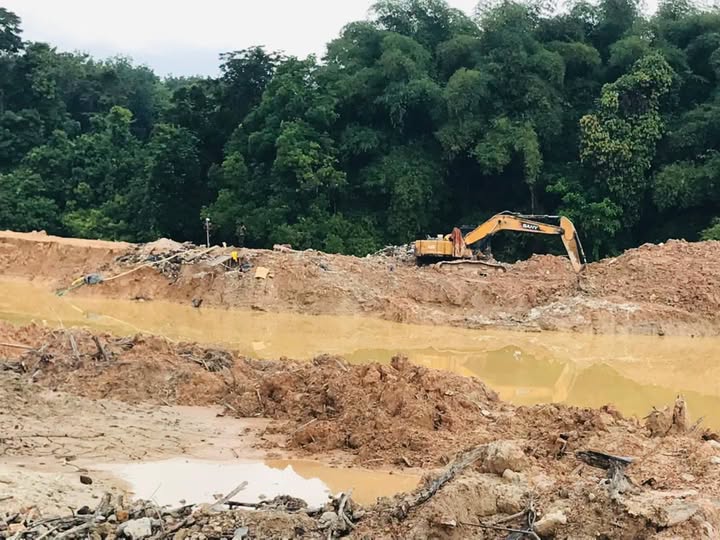
Illegal mining activities have degraded more than 2,000 acres of forest around the Lake Bosomtwe area over the past six years, according to an investigation by the Kumasi Mail News Desk based on satellite imagery analysis and field verification.


The assessment revealed that more than 1,500 acres of the destruction occurred between 2018 and 2024, while no active mining activities were observed in 2025.
However, the investigation found that illegal mining activities have resumed in 2026, with more than 250 acres of forest already degraded, raising concerns that the destruction is advancing closer to the lake at an alarming rate.
Lake Bosomtwe, located in the Ashanti Region, is a UNESCO Biosphere Reserve and one of Ghana’s most important natural ecosystems.
The assessment focused on galamsey activities occurring within a 1.5 to 3.5-kilometre range from the lake. While mining activities were detected within this buffer zone, the investigation did not identify any active mining operations within one kilometre of the lake.
The findings also indicate that some older illegal mining sites are gradually recovering through natural vegetation growth, suggesting signs of ecological restoration in some affected areas.
The destruction is concentrated mainly around Beposo in the Bosomtwe District and Dakabuoso in the Bosome Freho District, with most of the recent degradation recorded around Beposo.
According to the assessment, the total degraded land area is equivalent to more than 1,000 FIFA-standard football fields, highlighting the scale of environmental damage caused by illegal mining activities.
The investigation was conducted through a combination of satellite imagery review and on-the-ground verification to track changes in land cover and identify mining-related destruction around the lake.
Commenting on the findings, environmental analyst Kenneth Bansah, PhD, PE, warned that urgent action is needed to protect the area.
“Lake Bosomtwe is a UNESCO Biosphere Reserve and deserves protection. The law has no eyes or ears to correct itself. Action must happen,” he said.
The findings raise renewed concerns about the need for stronger enforcement measures to protect Lake Bosomtwe and prevent further encroachment by illegal mining activities.
Source: www.kumasimail.com