






































Public finance management is often discussed in technical language that can obscure a simple but important principle: public money should only be spent according to established laws and procedures. It is for this reason that governments across the world continue to strengthen procurement and expenditure controls to safeguard taxpayer resources.


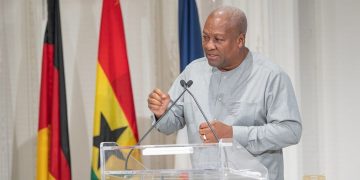
In Ghana, one of the key reforms introduced under President John Dramani Mahama’s administration was the tightening of procurement and expenditure authorization processes through amendments to the Public Procurement framework.
The objective was straightforward prevent unauthorized spending, improve fiscal discipline and ensure value for money in public expenditure.
Under the current arrangement, public institutions cannot simply award contracts and commit government resources at will. Before procurement processes commence for contracts requiring board or Central Tender Committee approval, entities must first obtain commitment authorization from the Ministry of Finance. Failure to do so is not merely an administrative lapse; it may constitute a breach of the law.
The process does not end there. Following authorization, the procuring entity must secure the necessary requisition approvals before beginning procurement proceedings. Once a contract is awarded, payments are not made in advance without justification. Contractors are expected to execute part or all of the work before submitting claims for payment.
These claims must be supported by evidence of work completed, including documentation and, where necessary, pictorial proof.
The sector minister is then required to validate the work and issue an Interim Payment Certificate (IPC), which is forwarded to the Ministry of Finance for further verification before payment authorization is sent to the Controller and Accountant-General’s Department.
It is against this background that recent claims regarding the release of funds to the Ministry of Food and Agriculture (MoFA) deserve closer scrutiny.
A Deputy Finance Minister reportedly stated that GH¢110 million had been released to MoFA for irrigation infrastructure projects. The claim immediately raises several questions.
First, the approved 2026 budget allocation for irrigation infrastructure is reported to be GH¢105 million. If that figure is accurate, how could GH¢110 million have already been released for the same purpose?
Second, were all the statutory procedures required for payment fulfilled? Were contracts awarded? Were works executed? Were Interim Payment Certificates issued and validated? If so, where is the documentation supporting such payments?
These questions become even more significant in light of information reportedly obtained from the Controller and Accountant-General’s Department, which, according to sources familiar with the matter, does not support the assertion that such a release has been made.
If the facts are as presented, then the issue extends beyond a simple discrepancy in figures. It touches on the credibility of public communication and the integrity of fiscal reporting.
Government officials occupy positions of public trust. Statements regarding public expenditure influence policy discussions, public confidence and investor perceptions. For that reason, accuracy is not optional; it is essential.
The controversy also highlights the importance of inter-ministerial coordination. Where conflicting narratives emerge between government institutions, the public deserves clarification grounded in verifiable records rather than political rhetoric.
In this instance, the Ministry of Food and Agriculture has largely refrained from escalating the dispute publicly. That restraint may prove beneficial, as the matter is ultimately one that should be resolved through facts, documents and official records rather than political exchanges.
The broader lesson is clear. Ghana’s strengthened procurement and expenditure controls were designed precisely to prevent uncertainty about how public funds are committed and disbursed. If the systems are functioning as intended, there should be a clear audit trail capable of confirming or disproving any claim about the release of public funds.
Until such evidence is presented, questions surrounding the alleged GH¢110 million irrigation fund release are likely to persist. In matters involving taxpayer resources, transparency is not merely desirable, it is indispensable.
Source: Isaac Justice Bediako Broadcast Journalistic