












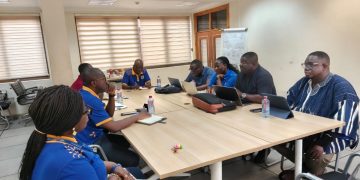


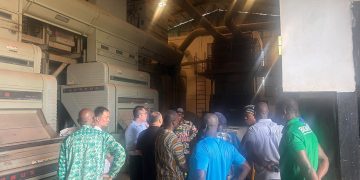























The Government of Ghana has reaffirmed its commitment to transforming the country’s shea industry with the official launch and inauguration of the National Shea Commodity Platform (NSCP) in Tamale.


The platform was launched on behalf of the Northern Regional Minister, Hon. Ali Adolf John, by the Municipal Chief Executive for Savelugu, Hon. Alhassan Fuseini, who described the initiative as a strategic intervention to strengthen coordination across the shea value chain, improve market access, attract investment, and unlock the sector’s vast economic potential.
Delivering the Minister’s address, Hon. Fuseini said the shea industry remains a vital source of livelihoods for thousands of people across Northern Ghana, particularly women and youth, and continues to play an important role in job creation, poverty reduction, and economic resilience.
He acknowledged challenges facing the sector, including limited access to finance and markets, inadequate processing technologies, weak stakeholder coordination, infrastructure deficits, and quality assurance gaps. He noted that the National Shea Commodity Platform was established to address these bottlenecks by fostering collaboration among government institutions, private sector actors, development partners, researchers, traditional authorities, civil society organizations, and producer groups.
The Minister further emphasized that the platform would promote policy dialogue, innovation, knowledge sharing, sustainable management of shea parklands, and stronger value chain linkages while advancing the economic empowerment of women, who form the backbone of the shea industry.
In his keynote address, Chief Executive Officer of the Tree Crops Development Authority (TCDA), Dr. Andy Osei Okrah, described the launch as a major milestone in efforts to formalize and modernize Ghana’s shea sector.
According to him, the platform aligns with TCDA’s vision of developing a competitive and sustainable shea industry through stronger stakeholder engagement, policy advocacy, research, value addition, investment promotion, market access, and climate resilience.
The launch brought together key stakeholders, including representatives of UNDP Ghana, the International Labour Organization (ILO), the Global Shea Alliance, the Forestry Commission, the Ghana Shea Employers Association, development partners, traditional authorities, research institutions, civil society organizations, and private sector actors.
The inauguration of the National Shea Commodity Platform marks a new chapter in Ghana’s efforts to build an inclusive, resilient, and globally competitive shea industry that creates jobs, empowers women, protects the environment, and contributes significantly to national development.
Source: www.kumasimail.com